Government jurisdictions of all sizes find themselves struggling with how to recoup lost tax receipts because of coronavirus pandemic-related shutdowns and restrictions.
But there are sound public policy prescriptions to recover from such shortfalls. And poor ones. A researcher at the Allegheny Institute for Public Policy proposes a sound, common-sense way for Pennsylvania to blunt the loss of fuel taxes.
“The pandemic has caused everyone to rethink how things are being done,” says Frank Gamrat, executive director. “The time has come to end Pennsylvania’s prevailing wage mandate.”
The Keystone State collects three petroleum-based fuel taxes.
There’s the oil company franchise tax on all oil companies conducting business in Pennsylvania for, in the commonwealth’s vernacular, “the privilege of exercising their corporate franchise, doing business, employing capital, owning or leasing property, maintaining an office or having employees in the commonwealth.”
Then there’s the fuels tax on diesel fuel and the liquid fuels tax on gasoline-powered vehicles.
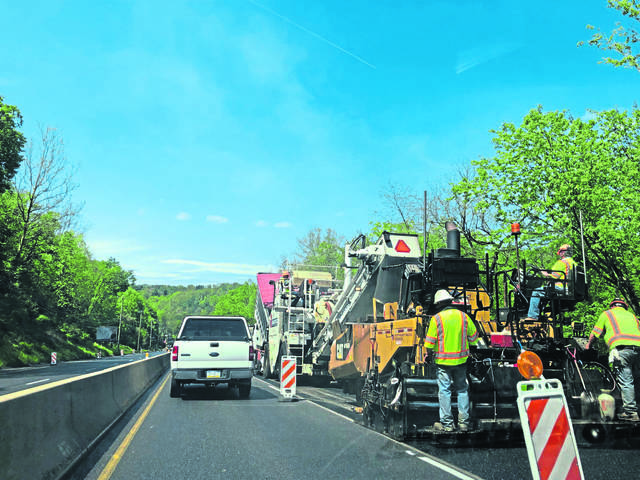
“In sum, all three petroleum-based fuels taxes had revenue declines in Fiscal 2019-20,” says Gamrat. “As stated in the Pennsylvania Code, these taxes are designated for highway maintenance and construction and, unfortunately, for the foreseeable future, those revenues are likely to fall short of the levels they would reach absent the covid-19 restrictions imposed by the state.”
But, again, there is a way to reduce the effect of those tamped-down tax receipts: Repealing Pennsylvania’s prevailing-wage requirement on public construction, including highway maintenance and construction.
“Pennsylvania’s prevailing-wage law mandates that the Department of Labor and Industry set a wage minimum to be paid on projects receiving government funding (in any form),” says Gamrat. “That minimum is typically (and artificially) defined as the union wage.”
While most contractors pay a similar wage, the added mandate of paying a cash rate for fringe benefits, if a benefit package is not being offered, can keep non-union firms from bidding.
The cash rate paid by a non-union firm is then subject to all payroll taxes. A union shop that shares in a large benefit plan is not required to pay these extra taxes (see Policy Brief Vol. 18, No. 25 for more details).
“The presence of the prevailing wage law keeps non-union firms from bidding on projects,” he notes. “And if they do win a contract and pay the higher mandated rates, those costs simply get passed on to the taxpayers who are funding them through the taxes collected.
“Removing the prevailing wage mandate will result in significantly lower costs for highway maintenance and construction projects and allow all levels of government to stretch limited highway dollars that much further,” Gamrat concludes.