McALLEN, Texas — Judges in Texas and New York on Wednesday said they would temporarily bar the U.S. government from deporting Venezuelans jailed in parts of those two states while their lawyers challenge the Trump administration’s use of a rarely-invoked law letting presidents imprison and deport noncitizens in times of war.
The judges took actions after civil rights lawyers sought to protect five men identified by the government as belonging to the Tren de Aragua gang, a claim their lawyers dispute. But the judges said some others in their judicial districts similarly situated would also be protected from deportations relying on the Alien Enemies Act.
The judicial moves were the first to occur after the U.S. Supreme Court on Monday ruled the administration can resume deportations, but deportees must be afforded some due process before they are flown away, including reasonable time to argue to a judge that they should not be deported.
The rulings did not address the constitutionality of the act. The American Civil Liberties Union is asking the judge in Texas to decide on whether it is lawful to use the Alien Enemies Act.
The United States is not at war with Venezuela, but President Donald Trump’s administration has argued the U.S. is being invaded by members of the Tren de Aragua gang.
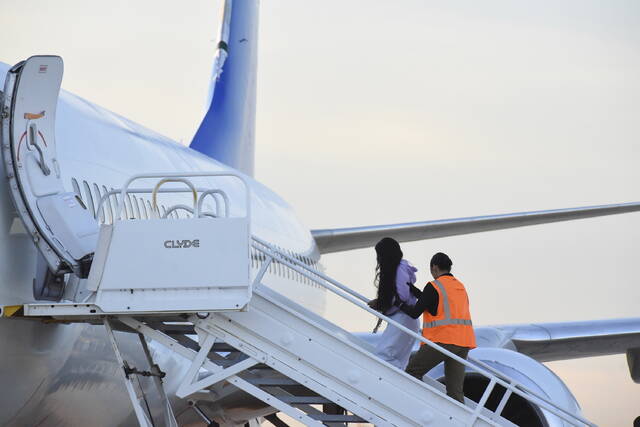
U.S. immigration authorities already have deported more than 100 people and sent them to a notorious prison in El Salvador without letting them challenge their removals in court.
Civil liberties lawyers brought lawsuits on behalf of three men detained in a facility in Texas and two held in an Orange County, New York, facility.
Judge Fernando Rodriguez Jr. signed a temporary restraining order in Texas while Judge Alvin K. Hellerstein said at a New York hearing that he planned to sign a temporary order Wednesday to block removals while court challenges proceed.
In Texas, Judge Rodriguez said anyone similarly situated at the El Valle Detention Center will be protected. In New York, Judge Hellerstein said his order will protect Venezuelans in the Southern District of New York, which includes the New York City boroughs of Manhattan and the Bronx, along with Dutchess, Orange, Putnam, Rockland, Sullivan and Westchester counties.
In Texas, the three plaintiffs include a man who is HIV positive and fears lacking access to medical care if deported.
The men were identified as gang members by physical attributes using the “Alien Enemy Validation Guide,” in which an ICE agent tallies points by relying on tattoos, hand gestures, symbols, logos, graffiti, and manner of dress, according to the ACLU. Experts who study the gang have told the ACLU the method is not reliable.
The lawsuits sought class action status to affect others who are detained and face similar deportation. The ACLU had requested a temporary restraining order to keep their petitioners in the U.S. and for the judge to declare the 18-century Alien Enemies Act, which the Trump administration is invoking, unlawful.
In New York, Hellerstein set a hearing for April 22 to decide whether a temporary restraining order he planned to sign Wednesday would be turned into a preliminary injunction.
At a hearing, Deputy Attorney General Drew Ensign from the Justice Department in Washington opposed a temporary order.
Ensign said he’d been told by immigration authorities that there were “only a handful” of Venezuelans, probably less than 10, detained in New York’s Southern District.
When Hellerstein said 10 individuals would be enough to make up a class, Ensign said: “We disagree.”
The case pertains to two Venezuelan men who also face deportation under the Alien Enemies Act. Civil liberties groups have sued the government on behalf of the two men, one 21 the other 32, who are being held by immigration authorities at a jail about 45 miles (72 kilometers) northwest of New York City.
Lee Gelernt, an ACLU attorney who argued for a restraining order in New York, said outside court that the ACLU was proceeding district by district at the moment but eventually will likely seek a nationwide injunction so civil rights attorneys don’t have to file cases in 96 different jurisdictions.
The Alien Enemies Act has only been used three times in the past, during the War of 1812, World War I and World War II, when it was used to justify the mass internment of people of Japanese heritage while the U.S. was at war with Japan.
The administration plans to expand its use for members of the Salvadoran gang MS-13, Todd Lyons, acting Immigration and Customs Enforcement director, told reporters Tuesday during Border Security Expo, a trade show in Phoenix.