ATLANTA — A federal judge held off Monday on releasing more information from a sealed report alleging that someone who gained access to Georgia’s voting computers could flip votes.
Before deciding whether to make portions of the report public, U.S. District Judge Amy Totenberg asked for proposals from Georgia election officials and plaintiffs suing over election security.
“I want people to understand the general concerns … without giving anyone a road map to hacking or intruding on the system or manipulating it,” Totenberg said during a court hearing.
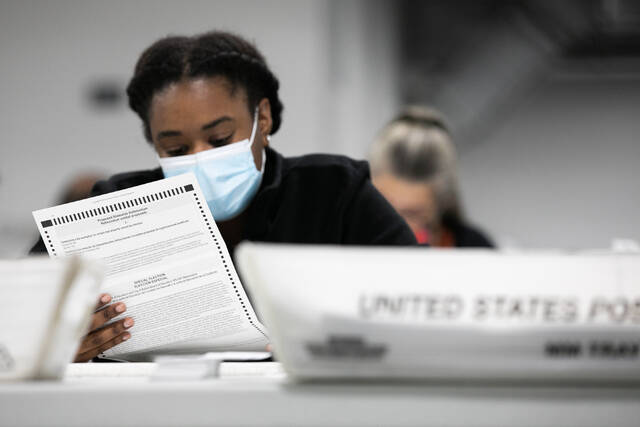
There’s no indication that Georgia’s election computers manufactured by Dominion Voting Systems were hacked in the 2020 election, but the lawsuit alleges that the touchscreens are a risk in future elections.
Totenberg said she hoped to move quickly to share information without undermining election security. She asked attorneys to submit proposals by Wednesday.
One option discussed in court would allow disclosure of the report to the Cybersecurity and Infrastructure Security Agency, a part of the U.S. Department of Homeland Security that wrote a letter to the judge Jan. 21 informing her that potential vulnerabilities could be disclosed and mitigated.
Meanwhile, a version of the report could also be prepared for public consumption.
Both Secretary of State Brad Raffensperger and election security advocates called last week for the report to be released following an article about it by The Atlanta Journal-Constitution.
Raffensperger has said Georgia’s voting system is protected by audits, physical security, passwords and voter ID laws.
While the report remains confidential, its author, University of Michigan computer science professor Alex Halderman, has described a summary of vulnerabilities in Georgia’s voting system.
Halderman has said that someone with physical access to a voting touchscreen or election management computer could install malicious software that would change votes contained in QR codes printed on paper ballots. QR codes aren’t readable by the human eye, and voters have no way to know whether they match the printed text of their choices.