CAPE CANAVERAL, Fla. — The new year will bring a pair of lunar eclipses, but don’t expect any sun-disappearing acts like the one that mesmerized North America last spring.
While the world will have to wait until 2026 for the next total solar eclipse, the cosmos promises plenty of other wow moments in 2025. It’s kicking off the year with a six-planet parade in January that will be visible for weeks. Little Mercury will join the crowd for a seven-planet lineup in February.
Five planets already are scattered across the sky — all but Mars and Mercury — though binoculars or telescopes are needed to spot some of them just after sunset.
“People should go out and see them sometime during the next many weeks. I certainly will,” said the Planetary Society’s chief scientist Bruce Betts.
Here’s a sneak peek of what’s ahead:
Eclipses
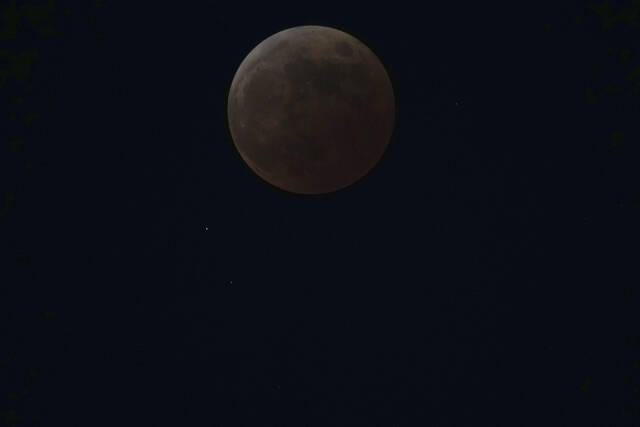
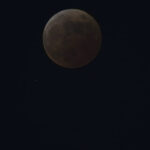
The moon will vanish for more than an hour over North and South America on March 14, followed two weeks later by a partial solar eclipse visible from Maine, eastern Canada, Greenland, Europe, Siberia and northwestern Africa.
The cosmic double-header will repeat in September with an even longer total lunar eclipse over Europe, Asia, Africa and Australia, and a partial solar eclipse two weeks later near the bottom of the world.
Supermoons
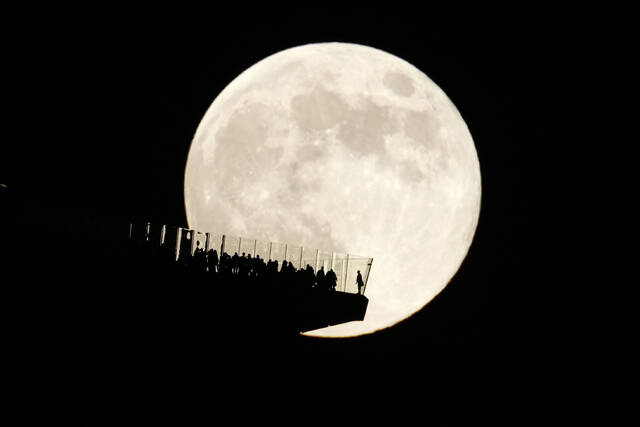
Three supermoons are on tap this year in October, November and December.
The full moon will look particularly big and bright those three months as it orbits closer to Earth than usual.
November’s supermoon will come closest, passing within 221,817 miles. Last year featured four supermoons, wrapping up in November.
Planet parade
Six of our seven neighboring planets will line up in the sky to form a long arc around mid-January. All but Neptune and Uranus should be visible with the naked eye just after sunset, weather permitting.
The parade will continue for weeks, with some of the planets occasionally snuggling up. Mercury will make a cameo appearance by the end of February. The planets will gradually exit, one by one, through spring.
Northern and southern lights
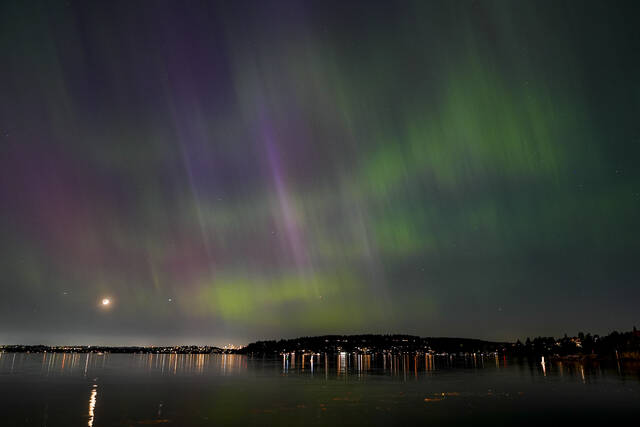
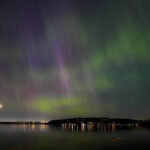
The sun burped big time last year, painting the sky with gorgeous auroras in unexpected places.
Space weather forecasters anticipate more geomagnetic storms that could yield even more northern and southern lights.
That’s because the sun has reached its solar maximum during its current 11-year cycle that could continue through this year. The National Oceanic and Atmospheric Administration’s Shawn Dahl urges everyone to stay on top of space weather news, so as not to miss any pop-up, razzle-dazzle shows.
Meteor showers
The Perseids and Geminids are perennial crowd-pleasers, peaking in August and December, respectively. But don’t count out the smaller, less dramatic meteor showers like the Lyrids in April, the Orionids in October and the Leonids in November.
The darker the locale and dimmer the moon, the better it will be for viewing. Meteor showers are generally named for the constellation in which they appear to originate. They occur whenever Earth plows through streams of debris left behind by comets and sometimes asteroids.