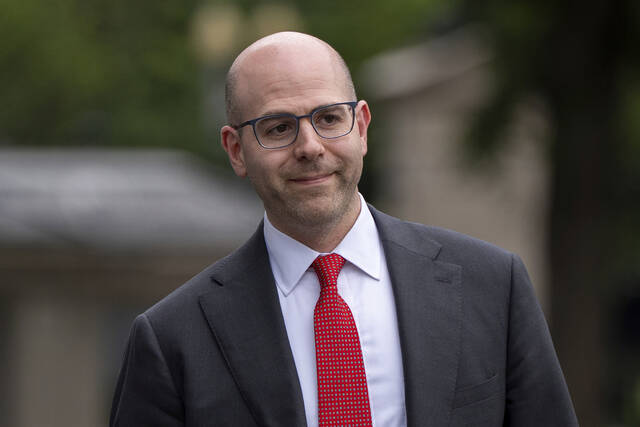
WASHINGTON — President Donald Trump’s appointee to the Federal Reserve’s Board of Governors said Monday that the central bank’s key interest rate should be much lower than its current 4.1% level, staking out a position far different than his colleagues.
Stephen Miran, who is also a top economic adviser to Trump, said in remarks to the Economic Club of New York that sharp declines in immigration, rising tariff revenue, and an aging population all suggest that the Fed’s rate should be closer to 2.5% instead. According to projections released last week, that’s almost a full percentage point lower than any of his 18 colleagues on the Fed’s rate-setting committee, an unusually high divergence.
Miran’s comments underscore the different perspective he brings to the Fed’s deliberations over interest rate policy. His appointment has been controversial because he has kept his position as the head of the White House’s Council of Economic Advisers while taking unpaid leave, raising concerns about the Fed’s traditional independence from day-to-day politics. His term on the Fed’s board expires in January, and Miran has suggested he would return to the White House after that, though he could remain on the board until a successor is appointed.
“It should be clear that my view of appropriate monetary policy diverges from those of other … members” of the committee, Miran said in written remarks. “I view policy as very restrictive,” he added, meaning that it is holding back the economy and “poses material risks” to the Fed’s congressional mandate of seeking maximum employment.
Miran said that fewer immigrants should free up more housing and lower rental costs, reducing inflationary pressures. And tariff revenues — which may top $300 billion a year, according to Congressional Budget Office estimates — should reduce the deficit, he added. Over time, that would mean the Fed doesn’t have to keep its benchmark interest rate as high as it is now to bring inflation down.