


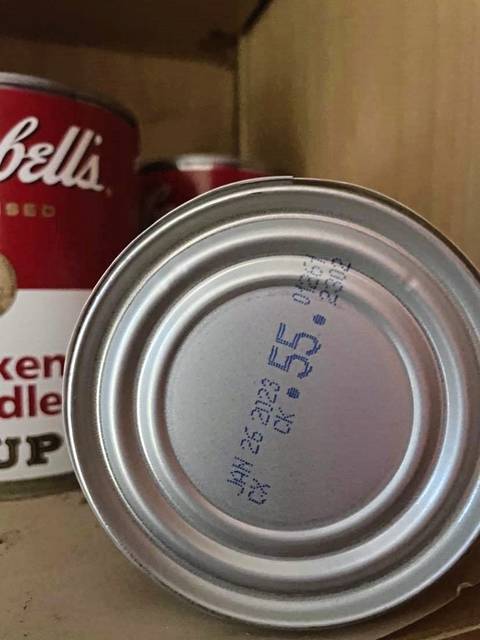
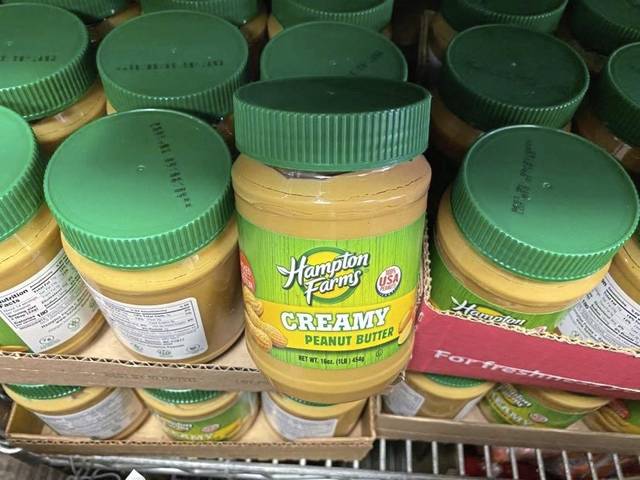

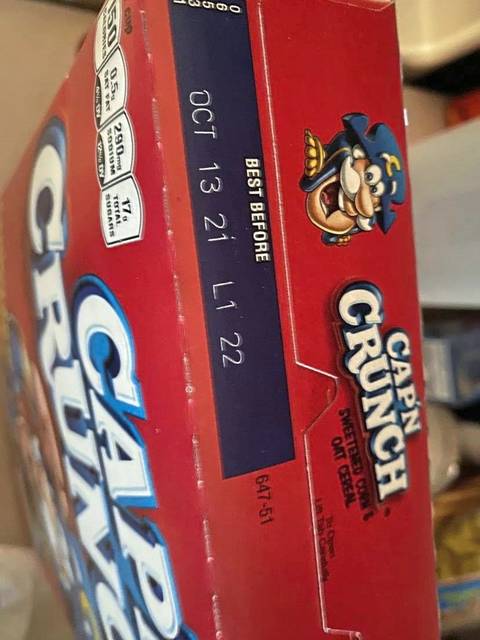


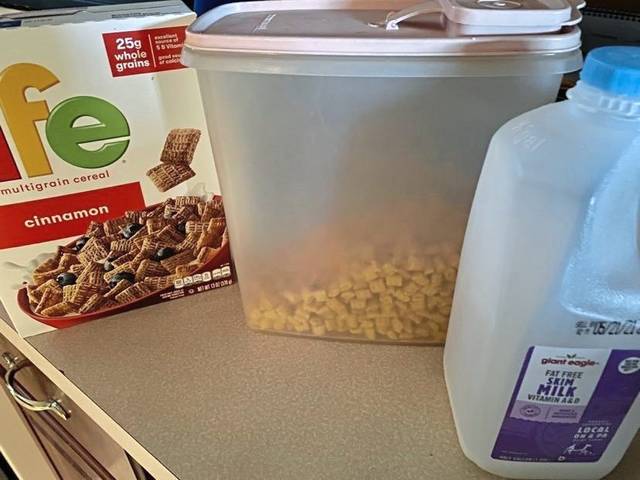

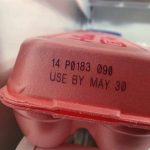

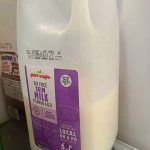
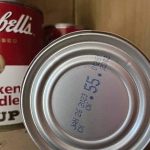

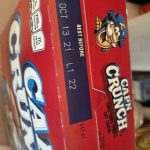



You pull an item out of the refrigerator, freezer or pantry and see it’s past the date on the package.
“Should I eat this or not?”
“Those dates are there for a reason,” said Martin Bucknavage, senior food safety extension associate for Penn State University in the college of agriculture at University Park. “They are set by the manufacturer for the best time to consume the product. It will be the best quality by that date.”
The manufacturer is giving the safest date, he said.
With that thought in mind, it is best to toss the product? That is what happens a lot, according to the U.S. Food & Drug Administration.
Between the food industry and consumers, Americans are throwing out about a third of their food — about $161 billion worth each year, the FDA says.
“Imagine this: You go to your favorite supermarket and come out with three bags full of groceries,” said Frank Yiannas, the FDA’s deputy commissioner for food policy and response, via its website. “Before you get in your car, you toss one of those bags in the garbage. Sound ridiculous? Of course, it does, but that’s in essence what food waste looks like every day across our country.”
Reading the label
There are ways to help decrease food waste, experts said. The first thing is understanding the dates put on food products. There is some confusion about that because the labels aren’t standard.
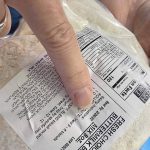
According to US Foods, a “best if used by/before” date indicates when a product will be of best flavor or quality. A “sell by” date tells the store how long to display the product for sale for inventory management. A “use by” date is the last date recommended for the use of the product while at peak quality.
Not an exact science
According to a statement by Kevin Smith, senior advisor for food safety in the U.S. Food & Drug Administration’s Center for Food Safety and Applied Nutrition, predicting when food will no longer be of adequate quality for consumption is not an exact science.
Smith advises consumers to routinely examine foods in their kitchen cabinets or pantry that are past the date to determine if the quality is sufficient for use. If the products have changed noticeably in color, consistency or texture, consumers may want to avoid eating them, he said.
According to the FDA’s website, the White House is working with the U.S. Department of Agriculture to help educate consumers on ways to reduce food loss and waste, and how to do it safely without risking illness from consuming spoiled food.
There is a FoodKeeper app is designed to promote understanding of food and beverage storage to maximize freshness and quality.
Temperature check
It is important to know the temperature of a refrigerator and freezer. According to the FDA, keep the refrigerator temperature at or below 40 degrees Fahrenheit. The freezer temperature should be 0 degrees Fahrenheit.
People often freeze items to help extend a product’s life, but it must be done properly, Bucknavage said. Package the product with a tight seal and date it. Most beef and pork will be good for six to nine months and chicken for six months, he said. He recommends when buying something such as fresh ground meat pre-made hamburgers or a meatloaf and then freeze.
If the power goes out it is best to keep the freezer and refrigerator closed until it’s restored and then check the temperature. With warmer weather approaching, don’t leave products sitting out.
Shelf life
Every item is different in terms of shelf life, Bucknavage said.
Something such as pasta, noodles and rice have a small amount of oil but can last longer, than say a can of tomatoes because it contains acid which can begin to eat away the lining of a can. If the can is dented, liquid may leak, said Bucknavage.
Diet sodas may go bad because artificial sweeteners break down over time. Fruits and vegetables can easily transfer bacteria.
Manufacturers know best
Ann Marie McNamara, vice president of food safety and quality assurance for US Foods based in Rosemont, Ill., said via email to always follow manufactures date suggestions.
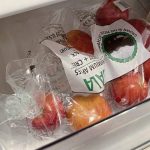
She recommends for optimal food safety to store dairy items, already cooked meats and leftovers on the middle and top shelves of a refrigerator. Store raw meat, such as chicken and beef, properly wrapped on the bottom shelf or inside a drawer so they don’t come into contact with other items.
Review the items in the refrigerator weekly, throw out any leftovers within three days, and remove anything that has expired.
Take it to the bank
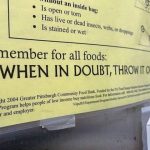
The sign on a refrigerator inside the food bank at the Allegheny Valley Association of Churches in Harrison reads “When in doubt, throw it out.”
“If it’s something you won’t eat, don’t expect someone else to eat it, said Jayne Bakos, food bank program coordinator for the Allegheny Valley Association of Churches. “If something looks bad, it probably is bad.”
Bakos said the food bank, which strives to distribute 40% produce for healthier eating, often includes recipes for what to make with the items so they aren’t wasted.
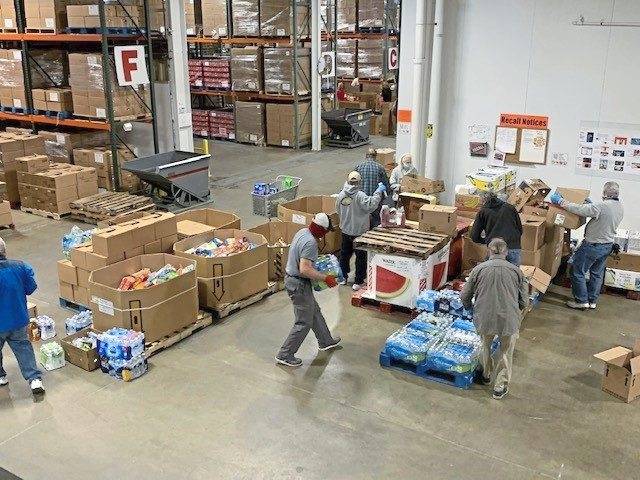
At Westmoreland County Food Bank in Delmont, director of development Lauren Hill said they manage expiration dates via an inventory management system.
“Every item that comes through our warehouse is checked for expiration dates, organized, inventoried, and then distributed based on that information,” Hill said.
She said individual households can incorporate a similar process to manage what’s in their pantries to reduce food waste.
“Simply making a grocery list before shopping and double checking to make sure you don’t already have those items in the cupboard helps to cut down on unnecessary purchases,” Hill said. “Regularly organize your pantry and freezer, and take note of the dates on foods. If a food is nearing its expiration date, move those items to the front of the shelf. Items that are easily seen are more likely to be used.”
“If you find yourself with an excess of nonperishable items that you cannot use, considering donating them to your local food bank,” she said. “Or share with your neighbors and friends.”