


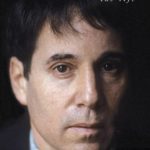

Initially Paul Simon was quite reluctant about agreeing to a biography about his life and music.
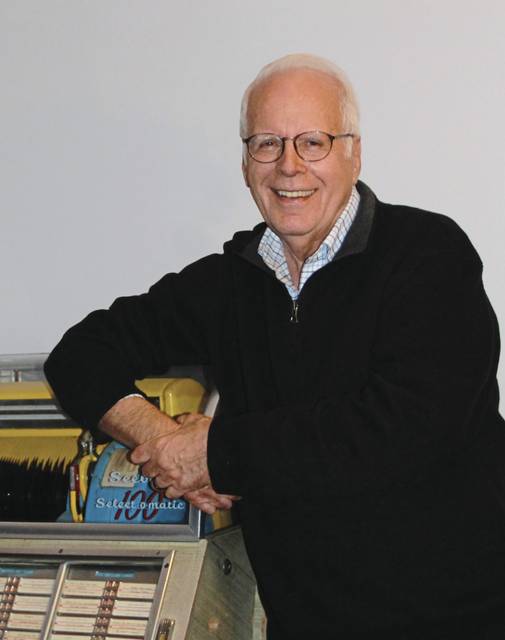
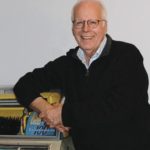
“Partially because of his private nature and, secondly, because he doesn’t like to do things, like interviews, that cut into time he might be using to work on his music,” explains Robert Hilburn, retired chief pop music critic for three decades for the Los Angeles Times.
“Music is Paul’s passion. But I stressed that I wanted to focus in the book on his music and his creative process,” says Hilburn, who has reported extensively on most of pop music’s giants, including Bob Dylan, John Lennon, Joni Mitchell, Leonard Cohen, Michael Jackson, Bruce Springsteen and U2.
The writer told Simon that he wanted to talk about his personal life as well, “because that is the definition of a biography,” he tells the Trib.
“But I kept telling him it would be a ‘serious’ book, not a typical celebrity biography. I also told him I felt he owed it to history; that his story, the music and the personal life, deserves to be documented.”
Eventually, Simon read Hilburn’s acclaimed “Johnny Cash: The Life.“ “I think he saw the ‘seriousness’ of that book and that helped convince him,” he says.
“After refusing previously to speak with any biographer, he agreed to open up his life to me, and I enjoyed our many talks greatly,” Hilburn says.
Artistic case study
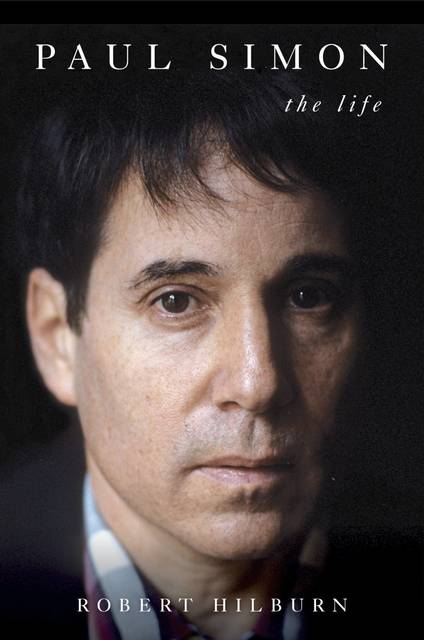
And now, with “Paul Simon: The Life,” (Simon and Schuster, 391 pages) decades of fans of perhaps America’s greatest living popular songwriter and one of its most important musicians, as well as those who simply appreciate the work of a master at the art and craft of music, are the beneficiaries of those more than 100-hours of taped conversations.
“Being a biography, the book, of course, tells Paul’s life story, but I also wanted the book to be a case study of an artist, both how great artistry comes about and how someone then protects that artistry from the many distractions, including fame and drugs, that have derailed so many great careers,” Hilburn explains.
“I’m not speaking of death here, but simply a loss of creative energy and drive. Of all the great songwriters from the 1960s and 1970s, for instance, Paul is probably the one who has continued to do the best work. There is a reason for that.”
Simon, 77, ended the road portion of what he said was the final tour in his career Sept. 17 in Pittsburgh, before he finished that weekend in his native New York City.
Thanks to Pittsburgh
He told his Pittsburgh fans at his PPG Paints Arena concert, “Let me begin by saying, ‘Thank you so much.’ It’s been a very interesting trip. Some nights I think about it (the closing of one chapter). Actually it is quite exhilarating letting go of what I have been doing since I was 13. It’s a big world out there and I just want to look around a bit and see what’s next.”
He has left the door open for occasional concerts for causes which he supports. The artist, who might be seen as our nation’s one-man Lennon-McCartney, assured the audience, “I’m not going to stop writing music.”
Hilburn’s book chronicles a defining era culturally and personally in so many lives, embracing the musical era and the events that many shared with him.
What readers learn
Readers learn about the songwriting process, the creative and business side of music, career building and the decision making process and Simon’s role in it all. It is being promoted, and rightfully so, as “a must-have book for any young musician and anyone who loves music, with great stories and anecdotes.”
(Sample: One of Simon’s most enduring songs, “The Boxer,” was largely written on an air sickness bag on a flight.)
Over a three-year period Hilburn conducted in-depth interviews with many of Simon’s friends, family, colleagues and others, including ex-wives Carrie Fisher and Peggy Harper, who spoke about Simon for the first time.
Simon & Schuster’s publicists note, “He even penetrated the inner circle of Simon’s long-reclusive muse, (British resident) Kathy Chitty (as in ‘Kathy’s Song’). The result is a deeply human account of the challenges and sacrifices of a life in music at the highest level.” Hilburn documents Simon’s search for artistry and his constant struggle to protect that artistry against distractions — fame, marriage, divorce, drugs, record company interference, rejection and insecurity — that have derailed so many great pop figures.
Unprecedented access
Simon gave Hilburn both unprecedented access and full editorial control.
“Paul and I have spoken about the book, of course, but I think I ought to leave it to him to say whatever he feels. In general, I can say his reaction was favorable,” the author says.
Hilburn had not heard from Simon’s former partner Art Garfunkel since the book came out.
“I very much wanted to interview Art, but he refused. He said he would talk if I was doing a book on Simon and Garfunkel, but not a book on Paul Simon,” he explains.
Hilburn does not think the book would have been substantially different even if Garfunkel had agreed to speak to him. “I spoke to many people close to Art, including two of his former managers, and I think that information enabled me to capture Paul and Art’s relationship,” he says.
“I would like to say how much I enjoy Paul, the person. It was very hard for him to open up, and it took months before he began to talk about his personal life in a meaningful way.”
He was always eager and open when it came to his music, Hilburn says.
“But, eventually, I could sense, he realized he needed to tell more about his personal feelings, and he did,” he adds. “And he never tried to take control of the book. He was honorable, and we had a lot of fun talking about our mutual passion for baseball. I’ll always have a soft spot in my heart for the book.”
Looking to his next project, Hilburn says, “I’ve got three or four projects in mind, but after Johnny Cash and Paul Simon, it’s hard to find people with the same cultural significance and creative legacy.”
Rex Rutkoski is a Tribune-Review contributing writer.